How to Choose a Lipstick Color for Your Skin Tone
Choosing a lipstick color can feel surprisingly difficult. A shade may look beautiful in the tube but appear too bright, too pale, too orange, or too cool once applied.
The best lipstick color is not determined by skin tone alone. Undertone, natural lip color, hair color, makeup style, and personal preference all affect how a shade looks. Two people with similar skin depth may wear the same lipstick very differently because one has a warm undertone and the other has a cool or neutral undertone.
This guide explains how to choose lipstick colors that complement your complexion while still leaving room for experimentation. These are not strict rules. They are practical starting points that can make shade selection easier.
How to Choose a Lipstick Color at a Glance
To narrow down your options:
- Identify your skin depth.
- Estimate whether your undertone is warm, cool, or neutral.
- Consider your natural lip color.
- Decide whether you want a subtle or high-contrast result.
- Choose a shade family.
- Test the lipstick in natural light when possible.
- Compare it with your full makeup look.
- Keep the shades that make you feel confident, even when they fall outside traditional recommendations.
A lipstick color does not have to “match” your skin perfectly. It only needs to create the effect you want.
Skin Tone vs Undertone
Skin tone and undertone are related but different.
Skin tone
Skin tone refers to the visible depth of your complexion.
Common descriptions include:
- Fair
- Light
- Medium
- Tan
- Deep
Skin tone may change slightly throughout the year due to sun exposure or seasonal differences.
Undertone
Undertone refers to the subtle color beneath the surface of the skin.
The main undertone groups are:
- Warm
- Cool
- Neutral
- Olive
Undertone usually stays more consistent even when the skin becomes lighter or deeper.
Understanding both can make lipstick shopping more predictable.
How to Identify Your Undertone
No single test is perfect, so it is better to compare several clues.
Look at your veins
In natural light:
- Blue or purple-looking veins may suggest a cool undertone.
- Green-looking veins may suggest a warm undertone.
- A mixture may suggest neutral or olive undertones.
This test is less reliable on deeper skin tones or when veins are not easily visible.
Compare gold and silver jewelry
Consider which metal tends to look more harmonious against your skin:
- Gold may complement warm undertones.
- Silver may complement cool undertones.
- Both may work well on neutral undertones.
This is a guide, not a rule.
Observe how white clothing looks
Compare bright white and cream near your face.
- Bright white may flatter cool undertones.
- Cream or ivory may flatter warm undertones.
- Both may work on neutral undertones.
Notice how your skin reacts to the sun
Skin that burns easily may lean cool, while skin that tans readily may lean warm or olive. However, this varies widely and should not be used as the only test.
Compare foundation shades
Existing foundation matches can be useful.
Look for labels such as:
- Warm
- Golden
- Peach
- Cool
- Rosy
- Neutral
- Olive
A foundation shade that consistently blends well may provide the clearest undertone clue.
What Is a Warm Undertone?
Warm undertones may appear:
- Golden
- Yellow
- Peach
- Bronze
Lipstick colors that often complement warm undertones include:
- Peachy nude
- Warm beige
- Coral
- Terracotta
- Brick red
- Tomato red
- Cinnamon
- Caramel
- Warm brown
- Orange-red
Very blue-based pinks or icy mauves may create stronger contrast, which can be beautiful when intentional.
What Is a Cool Undertone?
Cool undertones may appear:
- Pink
- Rosy
- Red
- Bluish
Lipstick colors that often complement cool undertones include:
- Rose pink
- Berry
- Mauve
- Plum
- Cranberry
- Blue-based red
- Raspberry
- Wine
- Cool nude
- Dusty pink
Very orange-based shades may look more dramatic against cool undertones.
What Is a Neutral Undertone?
Neutral undertones contain a balance of warm and cool tones.
People with neutral undertones often have flexibility across many shade families, including:
- Pink nude
- Peach nude
- Rose
- Mauve
- Classic red
- Berry
- Caramel
- Brown
- Coral
- Plum
The main challenge is often finding the right depth rather than the right temperature.
What Is an Olive Undertone?
Olive undertones may include green, golden, or slightly muted tones beneath the skin.
Lipsticks that often work well include:
- Warm rose
- Muted coral
- Terracotta
- Brick
- Brown nude
- Cinnamon
- Deep berry
- Burnt orange
- Red-brown
- Caramel
Some pale pinks, grey mauves, or overly white-based nudes may appear ashy, though the result depends on skin depth and natural lip color.
Best Lipstick Colors for Fair Skin
Fair skin can create strong contrast with lipstick, so even soft shades may appear vivid.
Common flattering options include:
- Soft pink
- Rose
- Peach nude
- Light mauve
- Coral
- Cherry red
- Blue-based red
- Soft berry
Fair skin with warm undertones
Consider:
- Peach
- Warm pink
- Coral
- Apricot nude
- Light terracotta
- Tomato red
Fair skin with cool undertones
Consider:
- Rose
- Raspberry
- Cool pink
- Mauve
- Cranberry
- Blue-red
Fair skin with neutral undertones
Consider:
- Pink beige
- Dusty rose
- Soft berry
- Balanced red
- Peachy rose
Very pale beige lipstick may blend too closely with fair skin and remove definition. A nude with a little pink, peach, or rose often looks more balanced.
Best Lipstick Colors for Light Skin
Light skin can wear a broad range of shades, especially when the undertone is considered.
Common options include:
- Rosy nude
- Peach
- Warm pink
- Mauve
- Coral
- Classic red
- Berry
- Light brown
Light skin with warm undertones
Try:
- Peachy beige
- Coral pink
- Warm rose
- Cinnamon nude
- Orange-red
- Brick
Light skin with cool undertones
Try:
- Dusty rose
- Cool mauve
- Raspberry
- Pink-red
- Plum
- Berry
Light skin with neutral undertones
Try:
- Rosewood
- Pink nude
- Peach nude
- Neutral red
- Soft brown
Lipsticks with a moderate depth often create definition without appearing overpowering.
Best Lipstick Colors for Medium Skin
Medium skin tones can often carry both muted and vibrant shades well.
Common options include:
- Rosewood
- Caramel nude
- Mauve
- Warm pink
- Terracotta
- Brick red
- Berry
- Brown-red
Medium skin with warm undertones
Consider:
- Caramel
- Coral
- Terracotta
- Cinnamon
- Warm rose
- Orange-red
Medium skin with cool undertones
Consider:
- Mauve
- Berry
- Plum
- Cranberry
- Cool red
- Rose pink
Medium skin with neutral undertones
Consider:
- Rose brown
- Neutral red
- Warm mauve
- Caramel pink
- Deep nude
Very pale nudes may create too much contrast unless paired with liner.
Best Lipstick Colors for Tan Skin
Tan skin often suits rich warm shades and deeper neutrals.
Common options include:
- Caramel
- Toffee
- Terracotta
- Warm rose
- Brick
- Burnt coral
- Deep berry
- Brown-red
Tan skin with warm undertones
Try:
- Copper
- Terracotta
- Burnt orange
- Caramel
- Warm red
- Cinnamon
Tan skin with cool undertones
Try:
- Deep rose
- Berry
- Wine
- Plum
- Cool burgundy
- Raspberry
Tan skin with olive undertones
Try:
- Rose brown
- Muted coral
- Brick
- Chestnut
- Deep nude
- Warm berry
Nudes often look best when they are close to the natural lip color or slightly deeper.
Best Lipstick Colors for Deep Skin
Deep skin can support rich, saturated shades beautifully.
Common options include:
- Chocolate brown
- Burgundy
- Wine
- Deep berry
- Plum
- Brick red
- Copper
- Deep rose
- Blue-red
- Espresso nude
Deep skin with warm undertones
Consider:
- Copper
- Brick
- Burnt orange
- Chocolate
- Deep coral
- Warm red
- Mahogany
Deep skin with cool undertones
Consider:
- Plum
- Wine
- Blackberry
- Blue-red
- Deep magenta
- Burgundy
Deep skin with neutral undertones
Consider:
- Rose brown
- Chestnut
- Balanced red
- Deep berry
- Chocolate nude
Very light beige lipstick may create a dramatic contrast. For a more natural nude, choose a shade close to the lip tone and use a deeper liner.
How Natural Lip Color Changes Lipstick
Your natural lip color affects the final result.
A lipstick may look:
- Darker on pigmented lips
- More muted on deeper lip tones
- Brighter on pale lips
- Different from the color shown in product photos
Sheer lipsticks and lip oils allow more of the natural lip color to show through.
Opaque formulas cover it more fully.
When shopping online, look for swatches on models with a similar skin depth and lip pigmentation.
Related guide: Best Lip Oils
How to Choose a Nude Lipstick
A nude lipstick should not necessarily match your skin exactly.
The most flattering nude is often:
- Similar to your natural lip color
- Slightly deeper than your skin tone
- Balanced with your undertone
- Defined with a suitable lip liner
Nude lipstick for fair skin
Try:
- Pink beige
- Soft peach
- Light rose
- Pale mauve
Avoid overly white or grey shades if they make the lips look washed out.
Nude lipstick for medium skin
Try:
- Rose brown
- Caramel pink
- Warm mauve
- Peach brown
Nude lipstick for tan skin
Try:
- Toffee
- Cinnamon
- Caramel
- Terracotta nude
Nude lipstick for deep skin
Try:
- Chocolate
- Chestnut
- Deep rose brown
- Espresso
- Rich caramel
A deeper liner can help blend a nude lipstick with the surrounding complexion.
How to Choose a Red Lipstick
Red lipstick can be warm, cool, or neutral.
Warm red
Warm reds contain orange, coral, or brick tones.
They often suit:
- Warm undertones
- Golden skin
- Olive skin
- Warm makeup looks
Examples include:
- Tomato red
- Brick red
- Orange-red
- Rust red
Cool red
Cool reds contain blue, berry, or pink tones.
They often suit:
- Cool undertones
- Rosy skin
- High-contrast makeup looks
Examples include:
- Cherry red
- Cranberry red
- Blue-red
- Raspberry red
Neutral red
A balanced red can work across many undertones and is a useful choice when you are unsure.
The intensity of the red is often more noticeable than the undertone, so confidence and application matter just as much.
How to Choose a Pink Lipstick
Pink lipstick ranges from pale ballet pink to deep fuchsia.
Warm pinks
Include:
- Coral pink
- Peach pink
- Salmon
- Warm rose
Cool pinks
Include:
- Baby pink
- Raspberry
- Fuchsia
- Blue-pink
Neutral pinks
Include:
- Dusty rose
- Pink beige
- Rosewood
- Muted pink
Pale pinks may need liner to prevent the lips from looking washed out.
How to Choose a Berry Lipstick
Berry shades can range from soft raspberry to deep blackberry.
They are often flattering because they combine red, pink, purple, and brown tones.
Lighter berry shades can work for daytime, while deeper berry colors create a more dramatic effect.
Warm undertones may prefer berries with red or brown depth. Cool undertones may prefer berries with purple or blue tones.
How to Choose a Brown Lipstick
Brown lipstick can look natural, polished, or dramatic depending on the depth.
Options include:
- Beige brown
- Rose brown
- Caramel
- Cinnamon
- Chestnut
- Chocolate
- Espresso
Choose a brown with enough contrast from your complexion so the lips remain defined.
For a softer result, blend it with a rosy or peach liner.
How to Choose Coral Lipstick
Coral combines pink, orange, and red.
It often works well for:
- Warm undertones
- Spring and summer makeup
- Golden or tan skin
- Fresh daytime looks
Fair skin may prefer softer peach-coral shades, while medium and deep skin can often carry stronger burnt coral or orange-coral tones.
How to Choose Plum or Burgundy Lipstick
Plum and burgundy shades create a deeper, more dramatic look.
They may include:
- Purple
- Red
- Brown
- Berry
- Wine tones
Cool undertones often suit purple-based plums, while warm undertones may prefer red-brown burgundy.
Deep shades usually look more even when applied with lip liner and a brush.
Should Lipstick Match Your Blush?
Lipstick and blush do not need to match exactly, but they should usually feel related.
Examples:
- Peach blush with coral or warm nude lipstick
- Rose blush with mauve or berry lipstick
- Bronze blush with caramel or terracotta lipstick
- Cool pink blush with raspberry or blue-red lipstick
Using completely different undertones can still work, but the result may appear more intentional when another element connects the colors.
Should Lipstick Match Your Eye Makeup?
A balanced makeup look often gives one area the most attention.
For bold eye makeup, choose:
- Nude
- Rose
- Soft brown
- Muted pink
For minimal eye makeup, choose:
- Red
- Berry
- Plum
- Coral
- Bright pink
This is not a rule. Strong eyes and bold lips can work together when the overall look is carefully balanced.
How Hair Color Affects Lipstick
Hair color can influence contrast.
Blonde hair
Often works well with:
- Rose
- Peach
- Coral
- Red
- Soft berry
Brown hair
Can support:
- Mauve
- Rosewood
- Brick
- Berry
- Brown nude
Black hair
Often creates enough contrast for:
- Red
- Burgundy
- Fuchsia
- Deep berry
- Plum
Red hair
May pair well with:
- Terracotta
- Warm rose
- Coral
- Brick
- Peach nude
Grey or silver hair
Often looks striking with:
- Rose
- Berry
- Blue-red
- Plum
- Mauve
Hair color should guide the overall contrast, not limit your choices.
How to Test Lipstick Before Buying
Test in natural light
Store lighting can alter how lipstick looks.
Check the shade near a window when possible.
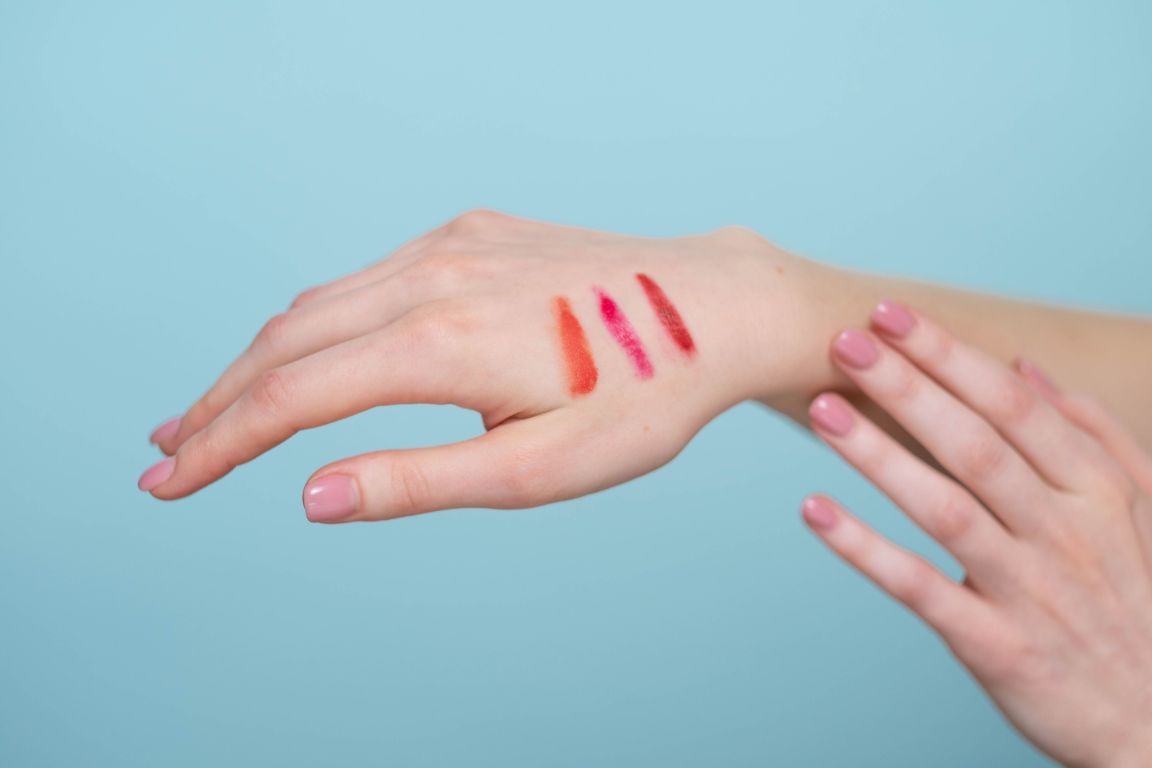
Swatch near the face
A hand swatch shows texture and undertone, but not how the color interacts with your complexion.
Hold the swatch closer to your face or test the product on the lips when hygiene procedures allow.
Compare several similar shades
Small undertone differences become easier to see when shades are placed side by side.
Wait a few minutes
Some formulas deepen or shift slightly as they set.
Check with your usual makeup
A lipstick that seems too bright on a bare face may look balanced with foundation, blush, or mascara.
How to Choose Lipstick Online
Online shopping makes shade selection harder, but a few steps can help.
Look for:
- Swatches on several skin tones
- Photos in natural light
- Video reviews
- Descriptions of undertone
- Reviews mentioning depth and pigmentation
- Comparisons with shades you already own
Do not rely only on the color shown in the tube.
Product images may be edited, and screen settings can alter the appearance.
Common Lipstick-Color Mistakes
Choosing by skin depth only
Two people with medium skin can need very different shades because of undertone.
Ignoring natural lip color
Pigmented lips can change the final result, especially with sheer formulas.
Choosing a nude that is too pale
A nude that matches the skin too closely may remove definition.
Testing only on the hand
The hand does not perfectly represent the face or lips.
Avoiding shades outside traditional rules
Some of the most interesting lipstick looks come from contrast.
Buying multiple similar colors without comparing them
Side-by-side swatches can reveal whether a new shade is truly different.
Forgetting lip liner
Liner can adjust the depth, warmth, and shape of a lipstick.
A Simple Lipstick Shade Formula
When uncertain, use this starting point:
For a natural everyday shade
Choose a lipstick:
- One or two shades deeper than your natural lip color
- Close to your undertone
- In a satin or cream finish
For a bright statement shade
Choose a color that creates clear contrast with your complexion.
For a polished red
Choose a balanced red and adjust it with warm or cool liner.
For a flattering nude
Choose a shade close to your lips rather than your foundation.
Frequently Asked Questions
How do I know what lipstick color suits me?
Begin with your skin depth, undertone, and natural lip color. Then consider whether you want a subtle or bold result. Testing several nearby shades is often the best way to identify what feels balanced.
What lipstick color works for all skin tones?
Balanced reds, rose-browns, mauves, and medium berry shades can work across many skin tones, although the exact depth and undertone may need adjustment.
Should lipstick be darker than my skin?
Not always, but a little contrast usually helps define the lips. Nude lipstick often looks more natural when it is slightly deeper than the surrounding skin.
How do I find my perfect nude lipstick?
Look for a shade close to your natural lip color, with enough pink, peach, brown, or rose to complement your undertone. Use a slightly deeper liner when necessary.
What lipstick color makes teeth look whiter?
Blue-based reds, cool pinks, berries, and plums may make teeth appear brighter by creating contrast with yellow tones. Warm orange-based lipsticks may emphasize warmth in the teeth.
Can warm skin wear cool lipstick?
Yes. Cool lipstick can create an attractive contrast on warm skin. Undertone recommendations are starting points, not restrictions.
Why does lipstick look different on me than in photos?
Skin tone, lip pigmentation, lighting, screen settings, application thickness, and surrounding makeup can all change how a shade appears.
Final Thoughts
Choosing lipstick by skin tone becomes easier when you consider undertone, depth, natural lip color, and the level of contrast you want.
Warm undertones often pair well with peach, coral, terracotta, and brick. Cool undertones often complement rose, berry, mauve, and blue-red shades. Neutral undertones can usually wear a wide range of colors, while olive undertones often suit muted warm tones, rose-browns, and rich berries.
These guidelines are useful for narrowing down choices, but they should not limit you. A lipstick that makes you feel confident is worth wearing, even when it falls outside traditional color recommendations.