LED Face Mask Colors Explained: What Each Light Is Used For
LED face masks use different wavelengths of visible or near-infrared light. Depending on the device, the mask may include red, blue, green, yellow, purple, or near-infrared settings.
Each color is marketed for a different skincare purpose. Red light is commonly associated with supporting smoother-looking skin, while blue light is often included in devices intended for blemish-prone skin. Near-infrared light is invisible and is frequently paired with red light in devices focused on overall skin appearance.
However, not every color has the same level of supporting evidence. A mask offering seven colors is not automatically more effective than a device using one or two well-selected wavelengths.
This guide explains what the common LED face mask colors are designed to do, how they differ, and what to check before adding a light-based device to your skincare routine.
LED Face Mask Colors at a Glance
| Light color | Commonly marketed use |
|---|---|
| Red | Smoother-looking skin and overall skin appearance |
| Near-infrared | Deeper light penetration and support for red-light routines |
| Blue | Blemish-focused skincare |
| Green | Uneven-looking tone and visible discoloration |
| Yellow or amber | Redness-prone or dull-looking skin |
| Purple | Combination of red and blue light |
| Cyan | Calming or balancing claims |
| White | Usually a combination of several wavelengths rather than true white light |
The exact wavelength matters more than the color name alone.
Two devices may both advertise “red light” while using different wavelengths, output strengths, and treatment times.
What Is LED Light Therapy?
LED stands for light-emitting diode.
An LED skincare device directs specific wavelengths of light toward the skin. Unlike ultraviolet light, cosmetic LED masks are generally designed without UV wavelengths.
The device does not use the same mechanism as a scrub, cleanser, serum, or chemical peel. Instead, different wavelengths interact with the skin in different ways.
At-home LED devices are usually less powerful than professional equipment. They are designed for repeated use over time rather than one intense session.
Results depend on factors including:
- Wavelength
- Light intensity
- Treatment time
- Distance from the skin
- Frequency of use
- Device design
- Skin concern
- Consistency
- Whether the light reaches the skin evenly
Does the Color of LED Light Matter?
Yes, but the visible color is only a simple way to describe wavelength.
Light is measured in nanometers, often abbreviated as nm.
Different wavelength ranges penetrate to different depths and are used for different purposes.
A device should ideally disclose its actual wavelengths rather than listing only colors.
For example, two red-light masks may use slightly different wavelength ranges even though both appear red.
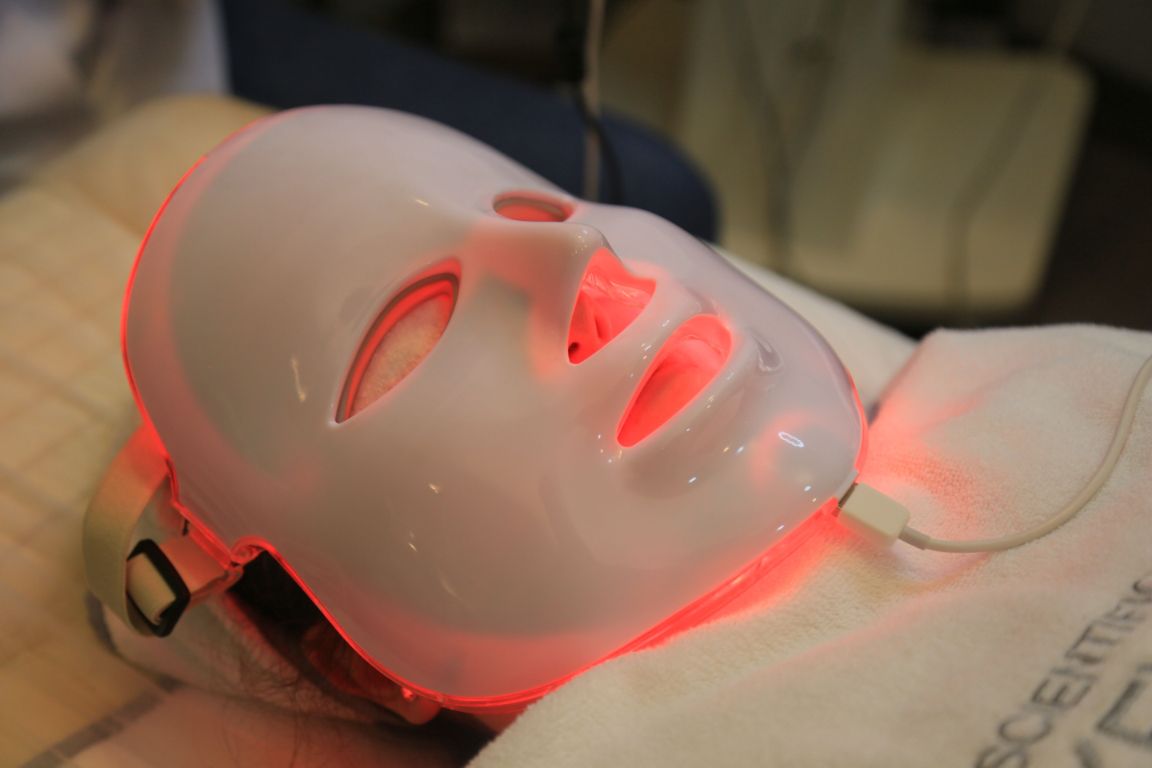
Red LED Light
Red is one of the most common colors in at-home face masks.
It is usually included in devices marketed for:
- Smoother-looking skin
- Improved appearance of fine lines
- More even-looking texture
- General skin rejuvenation
- Supporting a healthier-looking complexion
Red light generally penetrates more deeply than blue light.
Many red-light devices are intended for regular use over several weeks. The effect is usually gradual rather than immediate.
What Wavelength Is Red Light?
Red-light skincare devices often use wavelengths somewhere in the visible red range.
Common device specifications may include wavelengths around:
- 630 nm
- 633 nm
- 635 nm
- 660 nm
The ideal setting cannot be determined by wavelength alone. Light intensity and treatment time also matter.
Who Might Prefer Red Light?
Red light may appeal to people focused on:
- Fine lines
- Loss of visible firmness
- Dullness
- Uneven-looking texture
- General maintenance
- Post-breakout appearance after active inflammation has settled
It is not a substitute for sunscreen, moisturizer, or professionally recommended treatment.
Near-Infrared Light
Near-infrared light is not visibly bright in the same way as red or blue light.
It is commonly paired with red light because it penetrates more deeply.
Devices may market near-infrared light for:
- Overall skin appearance
- Supporting smoother-looking skin
- Complementing red-light treatment
- Recovery-focused routines
- More comprehensive light exposure
Common near-infrared specifications may appear around:
- 810 nm
- 830 nm
- 850 nm
Because the light may be invisible, the mask can still be operating even when you do not see that setting clearly.
Is Near-Infrared Better Than Red Light?
They are not necessarily interchangeable.
Red and near-infrared wavelengths reach different depths. Some devices combine them to provide broader exposure.
A combined device may be convenient, but the presence of near-infrared light does not automatically mean the mask is stronger or better.
Check:
- Published wavelengths
- Treatment time
- Device fit
- Eye-safety guidance
- Manufacturer instructions
- Independent testing information when available
Blue LED Light
Blue light is commonly used in masks marketed for blemish-prone skin.
It is usually associated with:
- Managing the appearance of active blemishes
- Supporting oilier skin routines
- Reducing the look of breakout-related redness
- Complementing other blemish-care products
Blue light remains closer to the skin’s surface than red or near-infrared light.
It is often included as a separate mode or combined with red light.
What Wavelength Is Blue Light?
Common blue-light specifications may appear around:
- 405 nm
- 415 nm
- 420 nm
The exact wavelength varies by device.
A product that only states “blue light” without technical details provides less information for comparison.
Is Blue Light Suitable for Every Blemish?
Not necessarily.
Blue-light devices are generally marketed for mild or occasional blemish concerns. They should not be expected to resolve every type of breakout.
Deep, painful, persistent, or worsening breakouts may need professional assessment.
Blue light may also feel drying or uncomfortable for some users, particularly when combined with strong blemish treatments.
Can Red and Blue Light Be Used Together?
Some masks include a combined red-and-blue mode.
This combination is often marketed for people who want to address both:
- Active-looking blemishes
- The appearance of post-breakout redness or texture
A combined setting may be more convenient than completing two separate sessions.
Follow the manufacturer’s schedule rather than doubling the recommended treatment time.
Purple LED Light
Purple light in home devices is often produced by combining red and blue wavelengths.
It is commonly marketed for:
- Blemish-prone skin
- Supporting recovery after breakouts
- Combining the purposes of red and blue light
- Overall balancing routines
Purple is not always a separate wavelength. In many masks, it simply means red and blue lights are operating at the same time.
Check the specifications to understand what the mode actually delivers.
Green LED Light
Green light is frequently marketed for:
- Uneven-looking skin tone
- Visible discoloration
- Dullness
- A more balanced-looking complexion
- Redness-related appearance
However, green-light claims may vary considerably between devices.
The presence of a green mode does not guarantee that it will noticeably improve pigmentation or uneven tone.
Daily sunscreen remains more important for preventing visible discoloration from becoming darker.
What Wavelength Is Green Light?
Green light is usually listed within a visible green wavelength range.
Some devices may use specifications around:
- 520 nm
- 525 nm
- 532 nm
The intended effect depends on the full device design, not the wavelength name alone.
Can Green Light Remove Dark Spots?
An at-home LED mask should not be expected to remove dark spots quickly or completely.
Visible discoloration may have several causes, and some types are more difficult to address than others.
Green-light marketing should be approached cautiously when a product promises dramatic or permanent pigment removal.
A broader routine may include:
- Daily sunscreen
- Gentle brightening products
- Avoiding irritation
- Consistent skincare
- Professional guidance for persistent changes
Yellow or Amber LED Light
Yellow or amber light is commonly marketed for:
- Redness-prone skin
- Dull-looking skin
- Supporting a calmer appearance
- Improving the appearance of uneven tone
- General skin refreshment
Depending on the device, yellow and amber may refer to slightly different wavelength ranges.
The evidence for these settings may be less established than for red and blue light.
Consider yellow light an optional feature rather than an essential requirement.
Cyan LED Light
Cyan or light blue-green settings may be marketed for:
- Calming
- Balancing
- Redness-prone skin
- Supporting oily skin routines
- General skin comfort
These claims vary widely across manufacturers.
Cyan light should not be confused with the deeper blue wavelengths commonly marketed for blemish-focused care.
White LED Light
“White light” may mean several wavelengths are operating at once.
It may not be one specific therapeutic wavelength.
Manufacturers may market white-light modes for:
- General skin maintenance
- Full-spectrum treatment
- Overall rejuvenation
- Product absorption
- Relaxation
Read the technical specifications to see which LEDs are actually used.
A white setting is not automatically more comprehensive or effective.
Does a Seven-Color LED Mask Work Better?
Not necessarily.
Many inexpensive masks advertise seven colors because multiple LEDs make the device appear versatile.
However, effectiveness depends more on:
- Correct wavelength
- Consistent light output
- Adequate intensity
- Even facial coverage
- Treatment duration
- Device fit
- Safety testing
- User consistency
A well-designed red and near-infrared mask may be more useful than a seven-color mask with poorly disclosed specifications.
More modes can also make the routine confusing.
Which LED Color Should You Choose?
Choose based on your main skincare goal.
For fine lines and general skin appearance
Consider:
- Red
- Red with near-infrared
For active-looking blemishes
Consider:
- Blue
- Red and blue combination
For uneven-looking tone
Consider:
- Red
- Green, when supported by clear specifications
- Yellow or amber as an optional feature
For redness-prone skin
Consider:
- Red
- Yellow or amber
- A gentle device with adjustable intensity
For general maintenance
Consider:
- Red
- Red with near-infrared
It may be better to select one clear purpose than to switch between every color without a plan.
How to Compare LED Face Masks
Check the Wavelengths
A credible product should clearly list its wavelengths.
Look for specific numbers in nanometers rather than only color names.
Check the Treatment Time
Common session lengths vary.
Some devices are designed for short sessions, while others require longer wear.
A shorter session is not automatically stronger. It may reflect greater output, but the manufacturer should provide clear guidance.
Check the Light Intensity
Light intensity may be described using irradiance.
Not every brand publishes this information, which makes direct comparisons difficult.
Higher intensity is not always better, especially when the device becomes uncomfortable or is not designed for the recommended exposure.
Check Facial Coverage
A mask should provide relatively even light coverage.
Consider whether it leaves large gaps around:
- Nose
- Mouth
- Jawline
- Temples
- Forehead
Poor fit may reduce consistent exposure.
Check Comfort
Consider:
- Mask weight
- Strap design
- Nose pressure
- Eye openings
- Heat
- Cord placement
- Whether you can move during treatment
A device that is uncomfortable may not be used regularly.
Check the Power Source
LED masks may use:
- Rechargeable controller
- Wall power
- USB connection
- Battery pack
A rechargeable controller often allows more movement during use.
Check Eye-Protection Instructions
Bright LED light can feel uncomfortable.
Some devices include:
- Built-in eye shields
- Protective goggles
- Raised eye openings
- Automatic shutoff
- Low-glare design
Follow the eye-safety guidance included with the device.
Do not stare directly into exposed LEDs.
How to Use an LED Face Mask
A basic routine generally includes:
- Remove makeup and sunscreen.
- Cleanse the face.
- Pat the skin dry.
- Apply the mask to clean skin unless directed otherwise.
- Select the appropriate mode.
- Complete the recommended session.
- Remove and clean the device.
- Apply serum or moisturizer.
- Use sunscreen during the day.
Follow the instructions for your specific mask because session length and frequency vary.
Should You Use an LED Mask on Clean Skin?
Most masks are designed for use on clean, dry skin.
Heavy creams, oils, makeup, or sunscreen may interfere with the light reaching the skin evenly.
Some manufacturers allow a lightweight serum underneath, but this should be stated clearly in the instructions.
Do not apply products that increase sensitivity immediately before a session unless the manufacturer confirms compatibility.
What Products Can Be Used With an LED Mask?
A simple routine is usually safest.
Before the mask:
- Gentle cleanser
- No heavy residue
- Approved lightweight serum, when permitted
After the mask:
- Hydrating serum
- Moisturizer
- Barrier-supporting cream
- Sunscreen during the day
Avoid turning every LED session into a complicated treatment routine.
Can You Use Retinoids With an LED Mask?
Some people use retinoids and LED devices in the same overall routine, but combining them may increase dryness or sensitivity.
A cautious approach is to:
- Use the mask on clean skin.
- Apply a gentle moisturizer afterward.
- Use the retinoid on a separate night when needed.
- Follow professional or manufacturer guidance.
- Reduce frequency if the skin becomes uncomfortable.
Prescription products should be used according to professional instructions.
Can You Use Exfoliating Acids With an LED Mask?
Strong exfoliating products may increase sensitivity.
Avoid applying a strong peel immediately before using a mask.
Consider alternating the treatments on different days.
Watch for:
- Burning
- Persistent redness
- Dryness
- Flaking
- Increased sensitivity
More treatments in one evening do not necessarily create better results.
How Often Should You Use an LED Face Mask?
Frequency depends on the device.
Some masks recommend:
- Three to five sessions per week
- Daily use for a limited initial period
- Several sessions weekly followed by maintenance
- Alternate-day treatment
Do not assume that more frequent use produces faster results.
Follow the manufacturer’s recommended schedule.
Consistency over time is generally more useful than completing several sessions in one day.
How Long Does an LED Face Mask Take to Work?
LED devices usually require repeated use.
Some people may notice temporary brightness or reduced redness shortly after a session, but broader changes generally take longer.
Progress may be easier to assess by:
- Taking photos in similar lighting
- Using the mask consistently
- Avoiding major routine changes at the same time
- Evaluating after several weeks
- Tracking skin comfort
Do not expect one session to create a permanent change.
Can You Use More Than One LED Color in a Session?
Only when the device instructions allow it.
Some masks automatically combine wavelengths. Others provide separate modes.
Do not complete multiple back-to-back sessions simply to use every color.
This may increase total exposure beyond the recommended amount.
Choose the setting that matches your primary concern.
Morning vs Evening LED Mask Use
An LED mask may be used in the morning or evening unless the manufacturer specifies otherwise.
Morning use
May fit well before:
- Serum
- Moisturizer
- Sunscreen
- Makeup
Evening use
May fit well after:
- Makeup removal
- Cleansing
- Before nighttime skincare
Evening use is often easier because there is more time to complete the session.
The best schedule is the one you can follow consistently.
Can You Use an LED Mask Every Day?
Some devices are designed for daily use, while others are not.
Daily use should only be considered when:
- The manufacturer recommends it
- The skin remains comfortable
- You are not exceeding the session duration
- You are not combining it with several irritating treatments
- There are no relevant contraindications
Stop or reduce use if irritation develops.
Does an LED Mask Feel Hot?
Most home masks should not become intensely hot.
You may notice:
- Mild warmth
- Brightness
- Slight pressure from the mask
- Warmth from close-fitting LEDs
Stop the session if the device becomes painfully hot, produces a burning sensation, or appears damaged.
Can LED Masks Burn the Skin?
A correctly functioning device used according to instructions should not create a burning sensation.
Potential problems may come from:
- Excessive session length
- Incorrect device use
- Faulty equipment
- Incompatible products
- Photosensitizing medication
- Using a device after a sensitizing treatment
- Very high-output or unregulated products
Stop using the mask if the skin becomes painful, swollen, blistered, or persistently red.
Who Should Be Cautious With LED Masks?
Seek professional guidance before use when you:
- Take medication that increases light sensitivity
- Have a diagnosed light-sensitive condition
- Have an active skin condition
- Recently completed a cosmetic procedure
- Have a history of unusual reactions to light
- Use prescription skincare that increases sensitivity
- Have eye conditions affected by bright light
- Are uncertain whether the device is appropriate
Product manuals may list additional restrictions.
Can Teenagers Use LED Face Masks?
Teen skin often does not need complex device routines.
A simple cleanser, moisturizer, sunscreen, and appropriately selected blemish product may be sufficient.
A teenager considering a blue-light mask for persistent breakouts should involve a parent, guardian, or qualified healthcare professional, particularly when breakouts are painful or leaving marks.
Are LED Face Masks Safe for the Eyes?
Bright LED exposure may be uncomfortable, and eye-safety recommendations vary by device.
Use:
- Included goggles
- Built-in eye protection
- Proper mask positioning
- Closed eyes when directed
Do not modify the mask or remove protective components.
People with eye conditions should seek professional guidance before use.
How to Clean an LED Face Mask
Clean the mask after each session.
A common method is:
- Turn the device off.
- Disconnect the controller or power source.
- Wipe the inner surface with a soft, slightly damp cloth.
- Use the cleaning method recommended by the manufacturer.
- Avoid soaking electrical components.
- Allow the mask to dry completely.
- Store it in a clean, dry place.
Do not use harsh chemicals unless the instructions approve them.
How to Store an LED Face Mask
Store the device:
- Flat when possible
- Away from direct sunlight
- Away from high heat
- In a dry area
- With the controller protected
- Without sharply bending flexible panels
- In the included bag or case
Do not place heavy items on top of a flexible mask.
Rigid vs Flexible LED Masks
Rigid Mask
Advantages:
- Structured shape
- Stable light placement
- Easy to wipe clean
- Often durable
Possible drawbacks:
- Heavier
- May press against the nose
- Fit may vary by face shape
- Less convenient for travel
Flexible Mask
Advantages:
- Sits closer to the face
- Often lighter
- May provide more even coverage
- Easier to store
Possible drawbacks:
- Can feel tight
- May require careful handling
- Strap fit matters
- Flexible panels can be damaged by sharp folding
The better design is the one that fits comfortably and provides even exposure.
LED Face Mask vs Handheld Device
Face mask
Best for:
- Full-face coverage
- Hands-free treatment
- Consistent routine
- Treating several areas at once
Handheld device
Best for:
- Targeted areas
- Greater control
- Smaller budget
- Travel
- Treating the neck or body when approved
A handheld device may require more time because each area must be treated separately.
At-Home LED Mask vs Professional Treatment
Professional LED equipment may offer:
- Higher output
- Controlled settings
- More uniform coverage
- Professional supervision
- Combination with other services
At-home masks offer:
- Convenience
- Lower cost per session over time
- Frequent use
- Privacy
- No appointments
Home devices are generally designed for gradual results and should not be expected to match every professional system.
Common LED Face Mask Mistakes
Choosing by the number of colors
Seven colors do not guarantee better performance.
Ignoring wavelength specifications
Color names alone provide limited technical information.
Using the mask over makeup
Makeup and sunscreen may interfere with even exposure.
Completing sessions for every color
More exposure is not automatically more effective.
Using the mask longer than recommended
Longer sessions may increase discomfort without improving results.
Combining it with several strong treatments
This may increase dryness or irritation.
Expecting immediate permanent results
LED routines generally require consistency.
Failing to clean the mask
Oil, sweat, and skincare residue can build up.
Buying a mask that does not fit
Poor fit may reduce coverage and make consistent use difficult.
Ignoring eye protection
Follow the specific safety directions.
How to Choose Between Red and Blue Light
Choose red light when your main concern is:
- Fine lines
- Texture
- Dullness
- General skin appearance
Choose blue light when your main concern is:
- Active-looking blemishes
- Oilier skin
- Breakout-focused care
Choose a combined red-and-blue device when you regularly experience blemishes and also want broader skin-maintenance benefits.
Is Green Light Necessary?
Green light is optional.
It may appeal to users concerned about uneven-looking tone, but it should not be the main reason to purchase a poorly specified mask.
Prioritize:
- Red-light specifications
- Near-infrared specifications
- Blue-light specifications when needed
- Fit
- Safety
- Comfort
- Manufacturer transparency
Is Near-Infrared Light Worth Having?
Near-infrared can be a useful addition to a red-light mask.
It may provide broader wavelength coverage and is commonly included in higher-quality skin-maintenance devices.
However, the overall design matters more than simply seeing “near-infrared” in the product title.
A Simple Red-Light Routine
- Cleanse and dry the face.
- Put on the mask.
- Select red or red-plus-near-infrared mode.
- Complete the recommended session.
- Clean the device.
- Apply hydrating serum.
- Apply moisturizer.
- Use sunscreen during the day.
Repeat according to the device schedule.
A Simple Blue-Light Routine
- Remove makeup and sunscreen.
- Cleanse gently.
- Dry the face.
- Select blue or red-and-blue mode.
- Complete the recommended session.
- Clean the mask.
- Apply a lightweight moisturizer.
- Avoid layering several harsh blemish products immediately afterward.
Monitor the skin for dryness or discomfort.
Frequently Asked Questions
What do the different LED face mask colors mean?
Red is commonly used for smoother-looking skin, blue for blemish-focused care, near-infrared for deeper light exposure, and green or yellow for uneven tone or redness-related appearance.
Which LED color is best for wrinkles?
Red light, often combined with near-infrared, is the most common setting in masks marketed for fine lines and smoother-looking skin.
Which LED color is best for blemishes?
Blue light is commonly used for active-looking blemishes. Some devices combine blue with red light.
What does purple light do in an LED face mask?
Purple usually means red and blue wavelengths are operating together rather than representing a unique wavelength.
Does green LED light remove dark spots?
Green light is marketed for uneven-looking pigmentation, but an at-home mask should not be expected to remove dark spots quickly or completely.
Are more LED colors better?
No. Wavelength accuracy, intensity, fit, treatment time, and safety matter more than the number of colors.
Can I use red and blue light on the same day?
Yes, when the device includes an approved combined mode or its instructions allow both. Do not exceed the recommended total treatment time.
How often should an LED face mask be used?
Follow the device instructions. Many masks recommend several sessions per week, while some are designed for daily use.
Final Thoughts
Understanding LED face mask colors makes it easier to separate useful features from marketing.
Red and near-infrared light are the most common choices for supporting smoother-looking skin and general skin appearance. Blue light is primarily included in blemish-focused devices. Green, yellow, cyan, purple, and white settings may offer additional options, but their benefits and technical specifications vary more widely.
Do not choose a mask simply because it advertises the most colors. Look for disclosed wavelengths, clear treatment instructions, comfortable fit, even coverage, and appropriate eye protection.
A consistent routine with one suitable setting is usually more practical than switching randomly between several colors.