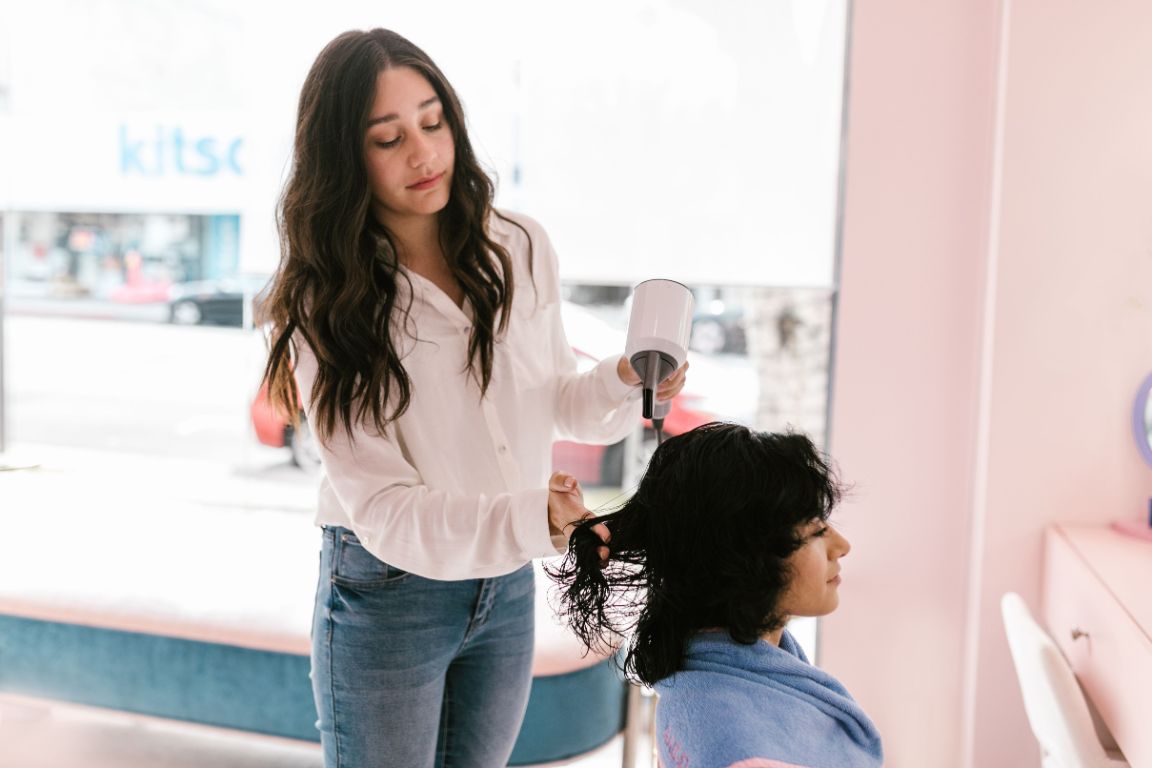
Air Drying vs Blow Drying: Which Is Better for Your Hair?
Air drying may seem like the gentlest way to dry your hair, while blow drying is often blamed for dryness and heat damage. In reality, neither method is automatically better for everyone.
The healthier option depends on your hair type, how long your hair remains wet, the temperature of your dryer, and how carefully you handle your hair during the drying process. Air drying avoids direct heat, but leaving hair wet for a long time can make strands more vulnerable to stretching, friction, and breakage. Blow drying is faster and can create a smoother finish, but excessive heat or rough technique may leave hair feeling dry and brittle.
This guide explains the differences between air drying and blow drying so you can choose a method that works for your hair, schedule, and styling goals.
Air Drying vs Blow Drying at a Glance
Air drying works well when you have enough time, want to avoid direct heat, and do not need a polished style immediately. Blow drying may be more practical when your hair takes a long time to dry, you want more volume or smoothness, or you need to avoid sleeping with wet hair.
The best approach for many people is not choosing one method exclusively. Partially air drying before finishing with a blow dryer on a low or medium heat setting can reduce drying time while limiting prolonged heat exposure.
What Happens When Hair Is Wet?
Hair absorbs water and temporarily swells when it becomes wet. During this period, the strands can be more vulnerable to stretching and mechanical damage.
Wet hair may be affected by:
- Vigorous towel drying
- Tight ponytails or buns
- Brushing with excessive force
- Friction against clothing or bedding
- Remaining damp for an extended period
- Repeated touching or restyling
This does not mean that wet hair is automatically damaged. It means that the way you handle it while drying matters just as much as the method you choose.
Benefits of Air Drying
It avoids direct heat
The clearest advantage of air drying is that it does not expose the hair to concentrated heat from a dryer. This can be useful for hair that already feels dry, fragile, chemically treated, or frequently styled with hot tools.
Reducing unnecessary heat may help preserve softness and make an existing haircare routine feel less demanding.
It requires fewer styling tools
Air drying can be simple and convenient when you are not in a hurry. After gently removing excess water, you can apply a suitable leave-in product and allow your hair to dry naturally.
This can be especially practical for people who prefer low-maintenance routines.
It can support natural texture
People with waves or curls may find that air drying allows their natural pattern to form without being disturbed by strong airflow.
The result depends heavily on the products and technique used. Scrunching, plopping, or applying curl cream may improve definition, while repeatedly touching the hair as it dries may create frizz.
It may reduce repeated styling
When air-dried hair already looks the way you want, there may be less need to use additional heat tools afterward.
However, this benefit disappears when air drying creates a finish that you later restyle with a dryer, flat iron, or curling iron.
Drawbacks of Air Drying
Hair can remain wet for a long time
Thick, dense, long, or low-porosity hair may take several hours to dry fully. Remaining wet for an extended period can be uncomfortable and may make the strands more vulnerable to friction and stretching.
Air drying is not necessarily the gentler option when hair stays damp for most of the day.
It may increase frizz
Air drying does not automatically produce smooth hair. Humidity, natural texture, product choice, and repeated touching can all affect the final result.
Some hair types dry with more frizz or uneven texture unless the roots and lengths are shaped during the drying process.
Wet hair can feel heavy
Long or thick wet hair places more weight on the strands and roots. Pulling wet hair into a tight bun or ponytail may add further tension.
A loose style is generally more comfortable while the hair dries.
Sleeping with wet hair can cause friction
Going to bed with wet or damp hair may increase friction between the strands and the pillow. It can also leave the hair flattened, tangled, or unevenly shaped by morning.
When possible, allow enough time for the hair and scalp to dry before sleeping.
Benefits of Blow Drying
It reduces the time hair remains wet
A blow dryer removes moisture much faster than air drying. This is helpful for people with dense hair or limited time.
Drying the roots efficiently can also prevent the scalp area from remaining damp for several hours.
It provides more styling control
A dryer can help create:
- Smoother-looking lengths
- More root volume
- A straighter finish
- Better curl definition with a diffuser
- A more controlled shape
- Reduced visible frizz
The result depends on airflow direction, attachments, brush choice, and heat setting.
It can make the routine more predictable
Weather and humidity can make air-drying results inconsistent. Blow drying gives you more control over the final shape and can be easier to repeat from one wash day to the next.
Modern dryers offer adjustable settings
Many hair dryers include several temperature and speed levels, cool-shot settings, concentrator nozzles, and diffusers.
These controls allow you to use less heat than the highest setting while still drying the hair efficiently.
Drawbacks of Blow Drying
High temperatures can leave hair feeling dry
Holding very hot airflow close to one area for too long may remove moisture aggressively and leave the hair feeling rough.
The risk increases when the dryer is used at maximum heat every day or combined with other hot tools.
Poor technique can create tangles
Blowing air in different directions may roughen the hair’s surface and create knots or frizz.
Directing airflow from the roots toward the ends usually produces a smoother result.
It may add tension
Using a round brush with excessive pulling can place unnecessary tension on wet or partially wet strands.
A gentler grip and controlled sections are usually enough to create shape without repeatedly stretching the hair.
Frequent styling takes time
Although blow drying reduces drying time, creating a polished blowout can make the full routine longer.
It may also require a brush, heat protectant, clips, and suitable dryer attachments.
Is Blow Drying Bad for Your Hair?
Blow drying is not automatically bad for your hair. Problems are more likely to occur when the dryer is extremely hot, held very close to the strands, or used repeatedly on the same section.
You can make blow drying gentler by:
- Removing excess water before starting
- Applying a heat-protectant product
- Choosing low or medium heat
- Keeping the dryer moving
- Holding it several inches away
- Drying in manageable sections
- Using the correct attachment
- Finishing with cool air when helpful
A dryer that allows precise temperature and speed adjustment can make this process easier.
Related guide: Best Hair Dryers for Fine Hair
Is Air Drying Bad for Your Hair?
Air drying is not automatically harmful either. The main concerns come from leaving the hair saturated for a long time or handling it roughly while wet.
Air drying may be less suitable when:
- Your hair remains wet for many hours
- You regularly sleep with damp hair
- Wet strands rub against clothing throughout the day
- You tie the hair tightly before it dries
- You repeatedly brush or touch it
- Your roots stay damp for an uncomfortable amount of time
A microfiber towel or soft cotton T-shirt can remove excess water without the vigorous rubbing associated with a traditional towel.
Which Method Is Better for Fine Hair?
Fine hair often dries relatively quickly, making air drying practical. However, it can also become flat at the roots or develop an uneven shape.
A blow dryer can add lift and movement when used carefully. Choose a lower heat setting and avoid concentrating heat on the same area.
For a balanced method, allow the hair to air dry partially before lifting the roots with a dryer.
Related guides:
Which Method Is Better for Thick Hair?
Thick or dense hair can take a long time to air dry. The outer layers may feel dry while the roots and inner sections remain damp.
Partially air drying and then using a blow dryer can be a practical compromise. Divide the hair into sections and focus first on areas that retain the most moisture.
A powerful dryer does not always need to be used at the highest temperature. Strong airflow with moderate heat can reduce drying time more comfortably.
Which Method Is Better for Curly or Wavy Hair?
Curly and wavy hair can work well with either method.
Air drying may preserve the natural pattern when you apply styling products and avoid touching the hair as it dries. A diffuser may be better when you want faster drying, more root lift, or a more controlled shape.
When diffusing:
- Use low or medium heat
- Choose low airflow when possible
- Avoid moving curls around excessively
- Hold the diffuser near sections rather than blasting air directly
- Stop before the hair feels overly dry
The better method is the one that creates your preferred texture without requiring extensive restyling.
Which Method Is Better for Dry or Damaged Hair?
Hair that feels dry, brittle, bleached, or heavily processed may benefit from reducing unnecessary heat. However, leaving fragile hair wet for many hours is not always ideal.
A gentle combination method may work best:
- Blot away excess water.
- Apply leave-in conditioner and heat protectant.
- Allow the hair to air dry partially.
- Finish with low or medium heat.
- Stop as soon as the hair is dry.
Avoid repeatedly passing hot air over sections that no longer feel damp.
Is Partial Air Drying the Best Option?
For many people, partial air drying offers a useful balance.
You can allow your hair to dry naturally until it is no longer dripping, then use a blow dryer to finish the roots and shape the lengths. This reduces the total time spent under heated airflow while also preventing the hair from remaining wet all day.
The ideal percentage is different for everyone. People with fine hair may air dry most of the way, while thick hair may need earlier assistance from a dryer.
How to Air Dry Hair More Gently
Remove water without rubbing
Use a microfiber towel or soft cotton T-shirt to press and squeeze excess water from the hair. Avoid twisting or rubbing aggressively.
Detangle carefully
Use your fingers or a suitable wide-tooth comb, beginning near the ends and working upward.
Do not force the tool through knots.
Apply products while the hair is damp
Depending on your hair type, useful options may include:
- Leave-in conditioner
- Curl cream
- Lightweight styling cream
- Anti-frizz serum
- Mousse
- Detangling spray
Avoid applying more product than your hair can comfortably hold.
Avoid tight hairstyles
A loose braid or low-tension style may be more comfortable than a tight ponytail or bun. Tight styles can place unnecessary tension on wet strands.
Keep your hands away
Frequent touching can disturb natural texture and encourage frizz. Shape the hair early, then allow it to dry with minimal interference.
How to Blow Dry Hair More Gently
Start after removing excess water
Do not begin with hair that is still dripping. Gently blot it first so the dryer does not need to run for as long.
Apply heat protectant
Distribute the product according to its directions, focusing on the lengths and ends unless the label recommends root application.
Use moderate heat
The highest setting is not required for every hair type. Begin with medium heat and adjust only when needed.
Keep the dryer moving
Avoid holding concentrated heat over one small section. Move continuously and maintain a comfortable distance.
Use the attachment
A concentrator nozzle directs airflow and can improve smoothness. A diffuser spreads airflow and is generally more suitable for curls and waves.
Dry the roots first
The root area often retains moisture longer. Drying it first can shorten the overall process.
Finish once the hair is dry
Continuing to blow hot air over already-dry hair adds exposure without improving the result.
Common Drying Mistakes to Avoid
Rubbing wet hair with a rough towel
Aggressive towel drying may create friction and tangles.
Using maximum heat automatically
Start lower. Increase the temperature only when it genuinely improves efficiency.
Holding the dryer too close
A small distance allows heat to spread more evenly.
Skipping heat protection
A suitable heat-protectant product adds an important step before heated styling.
Brushing roughly from the roots
Begin detangling at the ends and gradually work upward.
Going to sleep with very wet hair
Give the hair enough time to dry, especially near the roots.
Tying wet hair tightly
A tight elastic can place pressure on a small section of vulnerable hair.
Frequently Asked Questions
Is it healthier to air dry or blow dry your hair?
Neither method is universally healthier. Air drying avoids direct heat, while controlled blow drying reduces the amount of time hair remains wet. Your technique, hair type, heat setting, and handling habits are more important than the method alone.
Can I blow dry my hair every day?
Frequent blow drying may be manageable when you use moderate heat, apply heat protection, keep the dryer moving, and avoid repeatedly heating dry sections. Hair that already feels fragile may benefit from less frequent heat styling.
Should I let my hair air dry before blow drying?
Partial air drying can reduce the amount of time needed with the dryer. It is often a practical option when you want to limit heat exposure without leaving your hair wet for several hours.
Is cool-air blow drying better?
Cool air avoids high-temperature exposure, but it may take longer. Many people use moderate heat for most of the process and finish with cool air.
Is it okay to sleep with wet hair?
It is better to allow your hair and scalp to dry before sleeping when possible. Wet hair may experience more friction, tangling, flattening, and stretching against a pillow.
Final Thoughts
Air drying and blow drying both have advantages and limitations. Air drying removes direct heat from your routine, but it can leave thick or dense hair wet for a long time. Blow drying provides speed and styling control, but excessive temperature and poor technique may leave the hair feeling dry.
For many people, the best method is a combination: remove excess water gently, allow the hair to dry partially, and finish with a blow dryer on a controlled setting.
The goal is not to follow one rigid rule. Choose the method that dries your hair efficiently, creates the finish you want, and allows you to handle your strands gently throughout the process.